Joe Hudson on Procrastination: Why It Is Repressed Anger, Not Laziness
A 16-minute Joe Hudson coaching session explains four years of procrastination as repressed anger and the endurer pattern. What he saw, why it works, and how to use it.
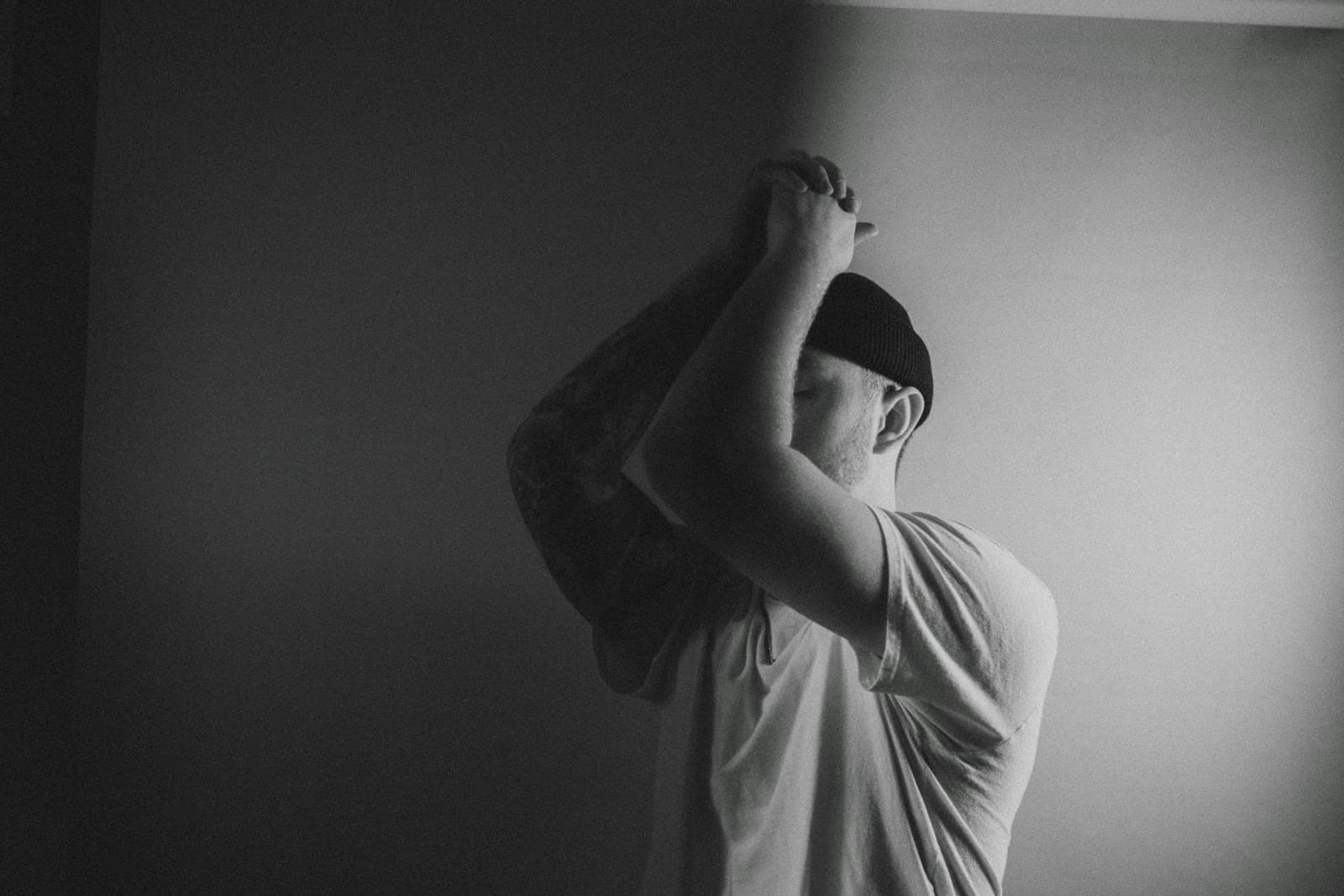
Audrey Shattuck on Unsplash
A PhD student comes to Joe Hudson with a productivity question. He has procrastinated for four years and wants to know how to work more effectively.
Joe answers with one word.
Grieve.
The student laughs. Joe repeats it. Then, within about ten minutes, the student is reporting white-hot anger, saying “I want your help” to a mother who berated him at the dinner table for years, and feeling something in his body he has not felt in a long time: quiet that is not dissociation.
I have analyzed 69 of Joe Hudson’s coaching sessions and written about what they reveal about high performance. But this one sixteen-minute session, published on his channel in July 2026, is the clearest demonstration I have seen of a mechanism most productivity advice never touches.
Procrastination is very often repressed anger.
Not laziness. Not a discipline problem. Not a missing system.
Anger, turned inward, wearing the costume of a to-do list.
The session in five moves
It is worth seeing the sequence, because the sequence is the argument.
Move one: the question underneath the question. The student says he cannot enjoy his work because paying attention to his body keeps bringing up grief. Joe points out that his real question is “how do I feel all my emotions and not stop working?” The student then reveals the actual problem: four years of procrastination on his PhD.
Move two: the diagnosis. Joe tells him he has been beating himself up relentlessly, “which is what’s creating the procrastination.” Telling himself it has to look a particular way. Forcing. Then the offer: “You can either grieve or continue in that process. Both will work. You’ll get your PhD done either way. One will just feel a lot better and probably happen quicker.”
Move three: where the voice comes from. Joe notices the student leaving “out the back of himself” mid-conversation, a small dissociation, and asks where he learned it. Quick answer, no thinking: a schizophrenic mother berating him at the table for three years straight. Joe: “So some part of that mom is now in your head, berating you during your PhD process. How accurate is that?” The student: “The words are pretty similar.”
Move four: the anger. Joe has him say, in an angry voice, ten times: I get to grieve. What happens in his system? “A lot of anger. It’s white hot.” Then the question that names the whole thing: “How much of your procrastination is repressed anger? Anger at yourself instead of anger out.” The student’s answer: this is what the inner criticism is. He is even angry at his own sadness. Underneath everything, “anger everywhere.”
Move five: the turn. Joe points out that the student now resists him the way he had to resist his mother. Any authority, including Joe, including his own plans, including the voice in his head, has to be resisted. Then the experiment. Say “I want your help” three times to Joe. Three times to his mother. And finally to the critical voice inside himself. The war goes quiet. What is left is fear, then tingling, then, to his surprise, pleasure.
Sixteen minutes. No time-management advice anywhere in it.
Why the anger goes inward
Joe’s working definition, from his breakdown of the therapy scene in Good Will Hunting, is blunt: shame is anger turned inwards.
A child who is berated at the table cannot fight back. Anger out is not safe. So the anger has nowhere to go but in, where it becomes the inner critic. Decades later the critic uses the same words the parent used, and it fires whenever the person tries to do something that matters.
That is the first reason procrastination is not solved by more pressure. The pressure is the problem. Every “just sit down and do it” you say to yourself is delivered in the parent’s voice, and your nervous system responds to it the way it learned to respond to that voice.
By resisting.
The endurer pattern
In the Good Will Hunting breakdown, Joe describes something he calls the endurer pattern. Will’s father put a wrench, a stick and a belt on the table and said “choose.” Will chose the wrench. Why? Out of pure defiance, in Will’s own much blunter words.
Joe’s reading: when the only way to keep a sense of self is to resist, resistance becomes the relationship you have with life. “There’s a way in which everything that you have or get has to come with some sort of fight.” Love has to be endured. Help has to be endured. Good things are suspicious.
The PhD session shows the same pattern from the inside. The student has to resist Joe. He notices he even gets angry at meditation teachers in videos. And, crucially, he has to resist his own plans, because the moment a plan exists it becomes “the next thing you tell yourself you have to do, like your mom did at the table.”
This is the part that explains why productivity systems fail for certain people and not others. Joe says it directly: whatever he tells the student to do, he will do it “for one or two or three weeks, and then you’re going to resist it.” Not because he is weak. Because obeying an instruction, even his own, feels like submission, and his system was built to never submit again.
If you have bought the planner, built the habit tracker, followed the morning routine, and watched every one of them collapse at week three, that is not a character flaw. It is the endurer pattern doing exactly what it was built to do.
Willpower recruits the wrong side
Once you see this, the standard advice becomes almost funny.
“Be harder on yourself” recruits the critic, which is the parent, which triggers the resistance, which produces the procrastination. More discipline is more of the thing that caused it.
Joe offers two honest options: grieve, or keep going the way you are going. He does not pretend the second one fails. The student will finish the PhD either way. One path just takes four more years of self-abuse.
That framing matters because it removes the fight. There is no authority telling you that you must grieve. There is a description of two roads and their costs. The endurer cannot resist a description.
What grief actually is
The word puts people off, because they hear sadness and they hear weakness. Joe’s definition is wider and more useful: grief is “the transition of one thing to another,” and it includes tears, anger and fear. In the student’s case, it is the transition from being ruled by his mother to not being ruled by her, which now means not being ruled by her voice in his head.
So “grieve” does not mean cry about your childhood. It means let the anger be anger instead of self-attack. Let the fear be fear instead of avoidance. Let the sadness underneath finally be felt, because, as Joe puts it in the endurer breakdown, the person in this pattern has been “enduring the pain, not feeling the pain.”
The anger is not the problem. It is the door. Joe says as much: for the endurer, “anger is a great way to move through that pattern into the sadness that’s really there underneath.”
The turn: “I want your help”
The most striking part of the session is the experiment at the end, and it is the one that applies most directly to anyone who recognises themselves here.
The endurer’s deepest rule is that help must be refused. Help is control. Care is a trap. So Joe has the student say the one sentence the pattern forbids. I want your help. First to Joe, whom he has just admitted he partly hates. Then to his mother, who could never give it. Then to the critical voice inside himself.
That last one is the key. The critic is not an enemy to be defeated. It is a part of you that learned to berate because berating was the only model of care it ever saw. Saying “I want your help” to it changes the relationship from war to something else.
What replaced the war, in the student’s body, was fear. Tingling everywhere. Joe’s instruction was to savour the tingling and see if it could be pleasure. It could. “Pleasure anxiety is a thing,” Joe says. “This is the work that you have to do.”
That is a nervous-system observation, not a motivational one. When a system that has been fighting for years stops fighting, the first thing it feels is not peace. It is the fear it was fighting to avoid. Staying with that fear until it turns into something like aliveness is the whole job.
How to use this if you procrastinate
Nothing here is a technique in the usual sense, but the session suggests a sequence you can try on yourself. Treat it as an experiment rather than a diagnosis: what surfaced for one person in a coached session is a lead to test, not a template.
- Listen to the tone, not the content. The next time you are avoiding a task, notice how you are speaking to yourself about it. If the voice is contemptuous, you are not facing a scheduling problem. You are being berated, and you are resisting the berating.
- Ask whose words those are. Quick answer, no thinking. Joe gets his answer in seconds because the truth is usually right there. If the words are “pretty similar” to someone from your past, you have a strong lead. Hold it as a hypothesis, not a verdict.
- Let the anger be anger. Out loud, in private, in an angry voice: I get to grieve. Or whatever sentence the voice has forbidden. Ten times. Notice what your body does. Heat, shaking, and tears are common, and usually mean something that was held is moving. One boundary: the student had Joe in the room. If what comes up feels bigger than you can stay with, stop, and do this part with someone rather than alone.
- Say the forbidden sentence to the critic. I want your help. Not to defeat it, to end the war with it. Expect this to feel absurd, then emotional.
- Stay with what comes after. The war going quiet leaves fear, and the fear often turns into tingling. Do not push it away and do not reach for the next plan. That sensation is what an unresisted nervous system feels like. Let it be pleasurable if it wants to be.
None of these will produce a finished thesis by Friday. What they produce is a system that no longer has to fight itself in order to sit down, which is the only thing that was ever missing.
Where I recognised myself
I spent years treating my own avoidance as a discipline problem, and I solved it the way most driven people do, by adding pressure. More structure, more self-criticism, more “this time I mean it.” It worked for a few weeks each time, which is exactly the interval Joe predicts. Then the resistance returned and I concluded I needed to be harder on myself.
What I did not see, until the anxiety forced me to look, was that the pressure had a voice, and the voice was not mine. The freedom did not come from finally winning that fight. It came from putting the weapons down and discovering that the thing underneath the fight was survivable.
Most of what I call avoidance in my own work with clients turns out, on inspection, to be someone protecting themselves from a voice. The task was never the threat. The voice was.
Common questions
Is procrastination really repressed anger?
Not always, but far more often than the productivity literature admits. The tell is the tone of your self-talk. Procrastination that comes with contempt for yourself is almost always resistance to that contempt, and contempt is anger that had nowhere else to go. Procrastination that comes with genuine indifference is a different problem, usually a values problem.
What is the endurer pattern?
Joe Hudson’s name for a way of relating to life learned by people who could only keep a sense of self by resisting. Everything, including good things, has to be fought for or endured. Help is refused, love is suspicious, and one’s own plans become the next authority to resist. It explains why the same person can be enormously resilient and chronically stuck at the same time.
Does this apply to ADHD procrastination?
Partly. Executive-function difficulties are real and are not a repressed emotion. But the two stack. A person with ADHD who has been told for thirty years that they are lazy usually carries exactly the kind of inner critic this session describes, and that critic adds a layer of resistance on top of the neurological one. Working on the anger does not remove the ADHD. It removes the fight about the ADHD, which is often most of the weight.
Who is Joe Hudson, and is his coaching legitimate?
Joe Hudson co-founded The Art of Accomplishment and has coached executives at companies including OpenAI, Google and Apple, according to his own channel. His main public work is the Art of Accomplishment podcast and a growing library of recorded coaching sessions like this one, plus a course called the Connection Course. My view is based on the public sessions, 69 of which I analyzed. What makes his work credible to me is not the client list. It is that the sessions are published in full, so you can watch the mechanism work rather than take his word for it.
What should I watch first?
The procrastination session if you recognised yourself above, and the Good Will Hunting breakdown if you want the endurer pattern explained with a film scene rather than a client.