Shaan Kassam Mentorship Cost: What I Paid, and What I Actually Got
Everyone asks what the mentorship costs. Almost nobody adds up what the years of searching cost them first.
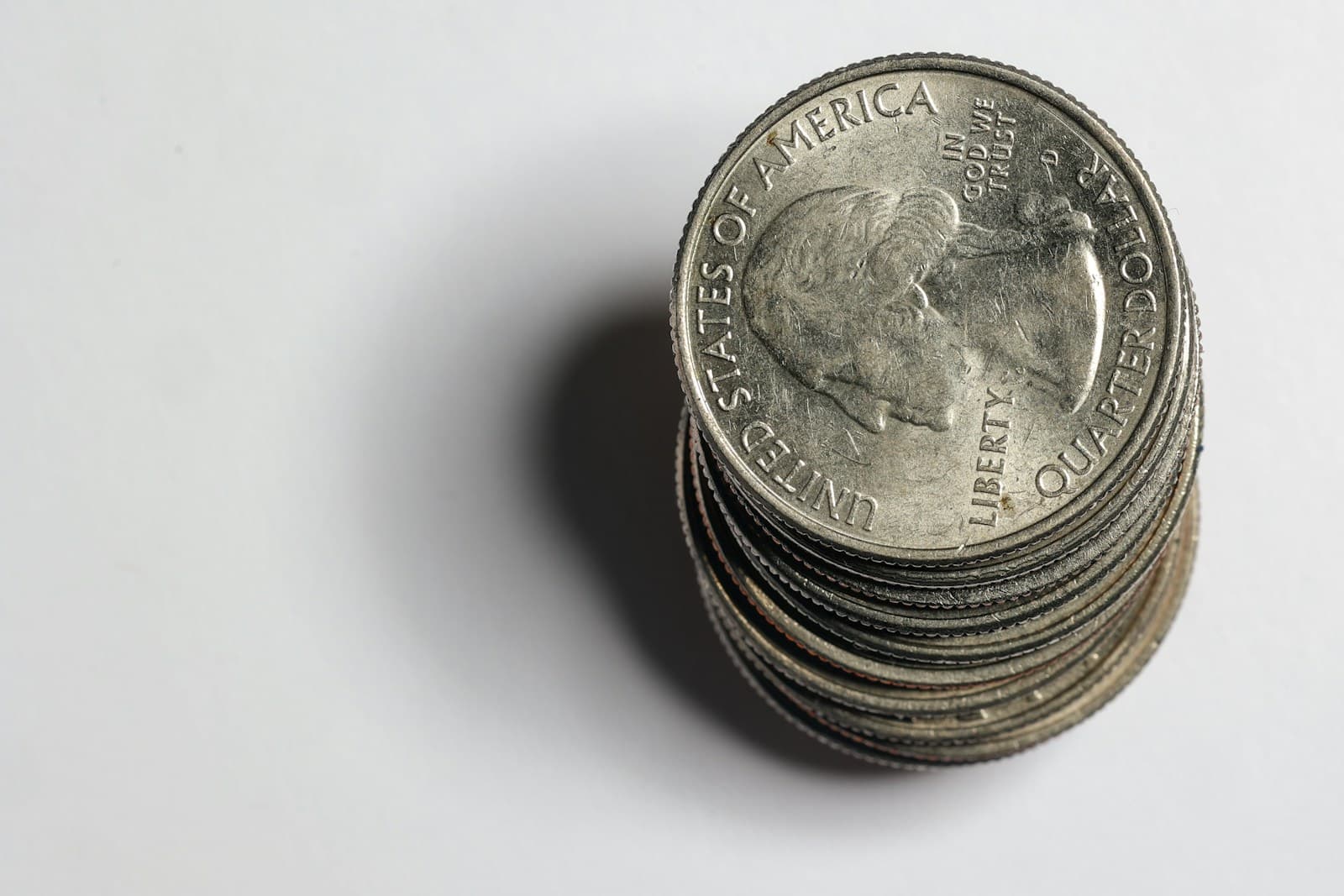
Joshua Hoehne on Unsplash
If you're reading this, you've probably already typed the question into Google.
What does the Shaan Kassam Mentorship cost?
I typed it too. More than once. And then I closed the tab and went back to watching free YouTube videos about anxiety recovery.
For two years.
I'm going to answer the question directly, because I think people deserve a straight answer before they get on a call with anyone. But I also want to answer the question underneath it, which is the one that actually mattered in my case:
Is it worth it?
What I Paid
I paid roughly five thousand US dollars.
That is a lot of money. I'm not going to perform some spiritual detachment about it and pretend it isn't. When I clicked the button, I felt slightly sick. It was the most I had ever spent on anything that wasn't a car or a rental deposit.
For that, I got several live group calls every week and a couple of one-on-one sessions with mentors, alongside the course material and the community.
One honest caveat before you go further: programs change their pricing, their structure, and what's included in a package. What I paid isn't a quote. Treat my number as a reference point and confirm the current terms directly with the program before you decide anything.
So that's the number.
Now here's the part almost nobody calculates.
What Ten Years of Not Paying Cost Me
Before I spent five thousand dollars on the mentorship, I had already spent a decade paying for anxiety in installments.
The installments just didn't arrive as a single invoice, so I never noticed the total.
There was hypnosis. There was EMDR. There was functional medicine, with its panels and protocols. There was Traditional Chinese Medicine. There were the books, dozens of them, because every new one promised the framing that would finally make it click. There were the supplements, bought in hopeful batches and abandoned half-full. There were the diet experiments, the courses I never finished, the apps I stopped opening after eleven days.
Roughly twenty thousand US dollars, all in.
Four times what the mentorship cost, spent in increments small enough that I never had to look at the total.
That's the trick of it. No single one of those decisions felt like a big financial commitment. Each was a few hundred here, a session package there, one more protocol worth trying. They never arrived as a single invoice, so I never sat down and added them up. If someone had shown me the total in year three and asked whether I'd like to keep going at that rate for seven more years, I would have said no immediately.
And then there was the cost that never showed up on a bank statement at all.
Ten years of saying no to things. Ten years of scanning rooms for exits. Ten years of leaving early, of declining invitations, of choosing the smaller version of a plan because the bigger one felt too exposed. Ten years of a mind that was busy in the background at all times, running a process I never asked it to run, using capacity I could have spent on work, on people, on building something.
I don't know how to price that.
But I know it wasn't cheaper than five thousand dollars.
That's the comparison people never make. They compare the mentorship price against zero, as if not paying is free. It isn't free. It has a price, and the price is another year of the same.
You Are Not Buying Knowledge
Here's the thing that makes the price genuinely hard to justify on paper.
Almost all of the information is already free.
Shaan gives away an enormous amount on YouTube. Claire Weekes wrote it down decades ago. Paul David's At Last a Life covers much of the same ground. If pure information were the bottleneck, you could recover with a library card and a good internet connection.
By the time I joined, I understood the principles. I could have explained sensitization, avoidance, reassurance seeking, and acceptance to you in detail. I was, in the most useless sense of the word, an expert.
And I was still stuck.
So no, you are not buying knowledge.
You are buying accountability. You are buying the constant companionship of people who have been through the fire themselves and came out the other side. You are buying experience, wisdom, and the guided application of that wisdom to your actual life, in real time, by people who can tell within thirty seconds when fear is talking and dressing itself up as reason.
That last part is the one I underestimated most.
Anxiety is extraordinarily good at disguising itself as something respectable. As responsibility. As intelligence. As self-awareness. As doing your due diligence. Left alone with it, I could rationalize almost any avoidance in a way that sounded mature.
You cannot spot that in yourself reliably. I tried for ten years.
Someone who has lived inside the same pattern spots it immediately.
Why the Group Calls Are Where the Magic Is
You get one-on-one calls, and they matter.
But if you asked me where the money actually went, I'd point at the group calls.
I did not expect that. Going in, I assumed the private sessions would be the valuable part and the group calls would be the filler, the scalable thing programs include to make the package look bigger.
It was the other way around.
On a group call, you watch other people. People from different countries, different jobs, different ages, different lives. And one of them describes, out loud, in plain language, the exact thing you have been carrying in silence for three years and feeling ashamed of.
The specific fear you were certain made you strange.
The behavior you have never told anyone about.
The question you've been too embarrassed to ask.
Someone asks it. And nothing bad happens to them. Nobody recoils. A mentor answers it like it's the most ordinary question in the world, because to them it is.
Something comes loose in that moment that no private session can reach, because the shame was never really about the symptom. The shame was about being the only one. And you cannot argue yourself out of that belief. You have to watch it fail, in front of you, repeatedly.
The other half of it is watching people move.
You see someone six weeks ahead of you describe a week that would have been impossible for them in month one. You see someone struggling in exactly the place you're struggling, and you see how it's handled instead of imagining how it might be. Over enough weeks, recovery stops being a concept you've read about and becomes a thing you have watched happen to people you know, at close range, in ordinary lives that look like yours.
That's not information. You can't get it from a video.
What It Is Not
I want to be direct about this, because I think it's where disappointment comes from.
This is not school.
If you're picturing a structured curriculum where everything is pre-digested and your job is to attend, absorb, and receive an outcome at the end, you will be frustrated, and you will feel like you overpaid. That expectation is the single most reliable way to waste the money.
Nobody hands you recovery in exchange for attendance.
The work itself is simple. Genuinely simple. You could write the core of it on an index card.
Simple is not the same as easy. Simple means the instructions are short. Easy would mean following them doesn't cost you anything, and following them costs you a great deal, because every instruction asks you to do the opposite of what your nervous system is screaming for. Stop checking. Stop seeking reassurance. Stop waiting to feel safe before you live. Go anyway.
The program gives you the process, the people, and the correction when you drift.
You supply the willingness to be uncomfortable on purpose, over and over, for months.
If you bring that, the price looks small.
If you don't, no price would have been low enough.
The Better Question
So don't ask what it costs.
Or rather, ask it, get the number, and then ask the question that actually determines your outcome:
How much am I getting for the money invested?
Not in features. Not in call counts or module lists. In what your life looks like on the other side of it, and in what another year of the current version costs you.
For me the honest answer is that I stopped organizing my life around preventing a feeling. The panic attacks are gone. The symptoms that used to run my days don't have that authority anymore. When stress spikes now, my system comes back down in hours instead of spiraling for months. My life is bigger than it was. My capacity is bigger than it was.
If you commit to the process — really commit, not shop it, not sample it, not evaluate it from a safe distance for another two years the way I did — what you're actually buying is a different relationship with yourself.
I don't know how to put a number on that one either.
But it wasn't five thousand dollars.