How Long Does It Take to Regulate Your Nervous System?
Minutes to calm your state, weeks to notice change, months to rebuild capacity. A realistic nervous system regulation timeline, and what actually speeds it up.
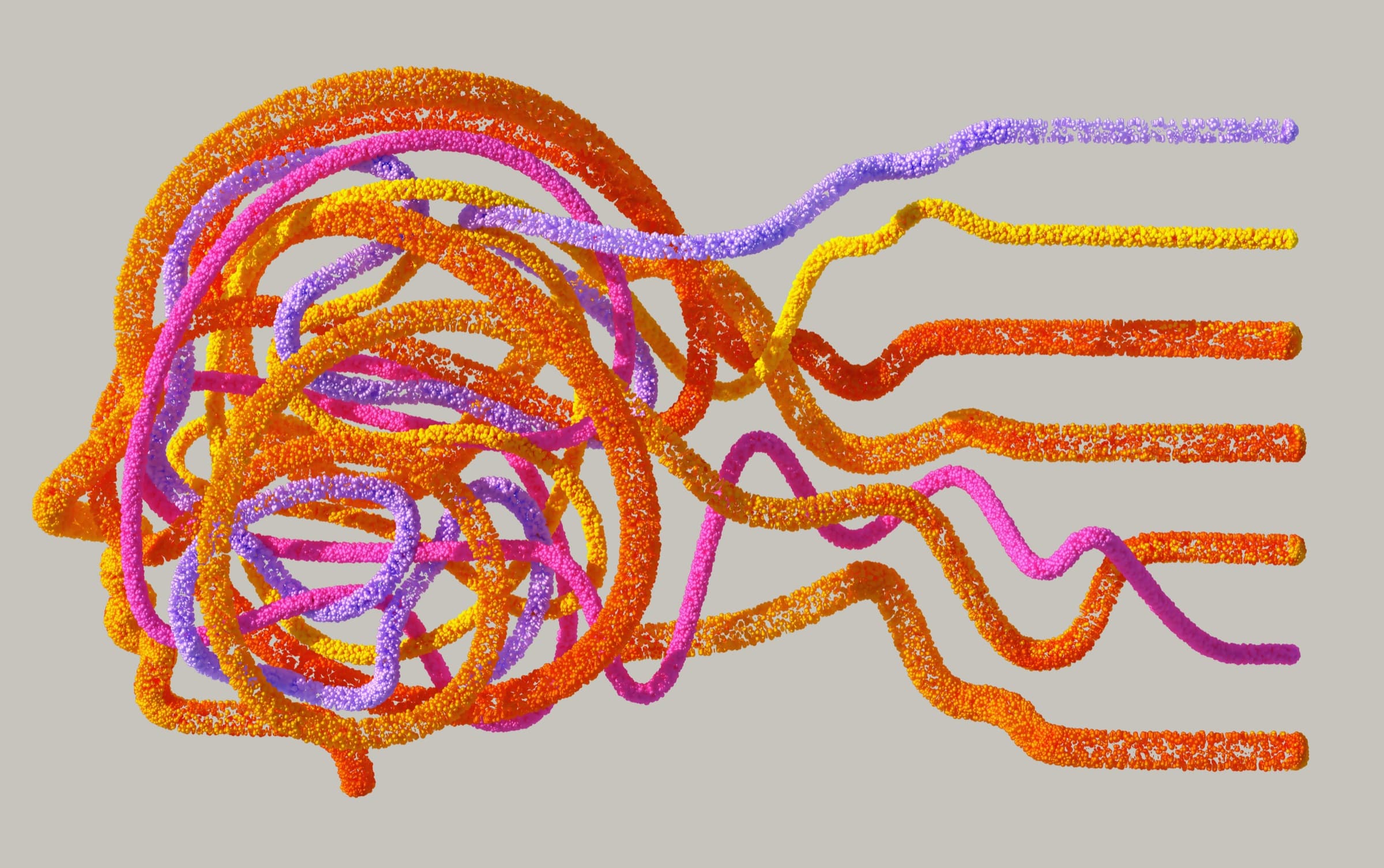
Google DeepMind on Unsplash
The short answer: there are two timelines, and most of the frustration comes from mixing them up.
- Changing your state — slowing your heart, softening your breath, coming down from a flood — can take minutes. Slow breathing, a walk, a meal, movement, or a real conversation all do this.
- Rebuilding capacity — a nervous system that no longer treats its own activation as danger — is learning, not an event. Most people notice the first real shifts within a few weeks of responding differently to their symptoms. A sensitized system usually needs months of repeated experience before it stops sounding the alarm at ordinary life, and longer if chronic stress, trauma, poor sleep, or unsafe relationships are still active.
Anyone who gives you an exact number is guessing. The rest of this article explains why the second timeline varies so much, what quietly stretches it, and what actually shortens it.
The first question most people ask when their body starts feeling unpredictable is also the most understandable one:
How long does it take to regulate your nervous system?
When my own nervous system first became sensitized, I asked some version of that question every day. How long will this wave last? When will I feel normal again? Is this going to stay forever?
I thought I was asking for information. In reality, I was asking from fear. I needed someone to give me a date because I did not yet trust myself to live with the sensations until they passed.
The question became part of the alarm.
Every morning was an assessment. Every difficult day felt like a setback. Every symptom became evidence that whatever I was doing was not working quickly enough. I kept searching for the right breathing pattern, meditation, supplement, explanation, or routine that would finally make the sensations disappear.
Some of those things helped me calm down. But calming down and increasing the capacity of a sensitized nervous system are not the same process.
Understanding the difference changed my recovery more than any single technique.
What “regulating your nervous system” actually means
“Nervous system dysregulation” is a broad popular phrase, not a precise medical diagnosis. People usually use it to describe a system that has difficulty responding proportionately to stress and returning to baseline afterward.
A well-regulated nervous system is not calm all the time. It becomes activated when life demands energy, attention, anger, action, or protection. Then, when the demand has passed, it can settle again. Regulation is flexibility.
Capacity describes how much activation you can experience without becoming frightened by the activation itself.
A nervous system with more capacity can register a poor night of sleep, an argument, a crowded room, a deadline, or a racing heart without immediately concluding that something is seriously wrong. A sensitized system has a lower threshold. It reacts more strongly to smaller or more ambiguous stressors, and it may take longer to recognize that the danger has passed.
Imagine a smoke alarm that once encountered a real fire and has since become exquisitely sensitive. It no longer waits for flames. Steam from the shower is enough. Toast is enough. Sometimes it seems to go off for no reason at all.
The alarm is not broken in the sense that it has stopped doing its job. It is doing its job too aggressively.
Research on chronic stress offers a more technical version of the same idea. Prolonged stress can bias the brain toward faster defensive responding while weakening some of the prefrontal functions involved in flexible attention, working memory, and top-down regulation. These patterns are neither a personal failure nor a permanent sentence. The stressed brain remains plastic, and some stress-related changes can reverse when conditions improve. But the findings help explain why a sensitized person may experience an ordinary demand as if it carries extraordinary weight. Research on stress and prefrontal regulation describes this shift in detail.
There are two different timelines
The question “How long does it take to regulate your nervous system?” contains two questions that are often confused.
The first is: How long does it take for my current state to change?
That can sometimes happen within minutes. Slow breathing can influence heart rate, heart-rate variability, and subjective anxiety during or shortly after practice. A walk, a conversation, a meal, music, movement, rest, or a change of environment can also shift your state surprisingly quickly. A large systematic review and meta-analysis found that voluntary slow breathing can affect cardiac measures associated with parasympathetic activity.
The second question is: How long does it take to build a system that is less afraid of activation?
There is no universal answer. That kind of change is not a single physiological event. It is learning. It develops through many experiences in which the alarm activates, the predicted catastrophe does not happen, and you discover that you can remain present without abandoning yourself or your life.
For some people, meaningful changes become noticeable over weeks. For others, rebuilding capacity takes months or longer, especially when chronic stress, trauma, illness, grief, isolation, poor sleep, unsafe relationships, or overwhelming life conditions are still present. Progress is rarely linear. A system can become more resilient and still react strongly during an unusually demanding week.
The absence of a universal timeline is frustrating only while time still feels like a threat.
When regulation techniques become safety behaviors
Breathing, tapping, meditation, grounding, cold exposure, exercise, and other nervous-system practices are often described as tools for “regulation.” Many of them can be useful. The problem begins when we assign them a very specific job:
Make this sensation go away immediately.
At that point, a practice can become a safety behavior — a ritual you believe you need in order to prevent something bad from happening.
The distinction matters. You can take five slow breaths because you enjoy reconnecting with your body and want to support it. You can also take five slow breaths while urgently checking after each exhale whether the anxiety has finally disappeared. The behavior looks identical from the outside. Internally, the two experiences teach very different lessons.
The first says: “I can care for myself while this is here.”
The second says: “This must leave before I am safe.”
Relief is not the enemy. When you are overwhelmed, grounding yourself can be wise and compassionate. Early in recovery, supportive practices may make difficult experiences tolerable enough to stay present. The danger lies in turning every sensation into an emergency and every technique into a rescue operation.
If the sensation disappears after the ritual, the anxious mind may conclude that the ritual prevented disaster. If the sensation remains, it may conclude that the situation is even more dangerous because the rescue attempt failed. Either interpretation can preserve the original fear.
Exposure-based therapies are built around a different kind of learning. Their purpose is not merely to reduce fear during an exercise. They help a person discover that a feared situation or bodily sensation can be experienced without the expected catastrophe and without relying on avoidance or compulsive protection. Modern inhibitory-learning approaches to exposure therefore focus on building new associations with feared cues, rather than demanding that fear disappear in the moment.
This does not mean throwing away every tool and forcing yourself through overwhelming situations. It means becoming honest about the contract underneath the tool.
Am I supporting myself — or am I trying to prove that I cannot handle the next five minutes without intervention?
The fire alarm learns from your response
Once a new or severe symptom has been appropriately evaluated, and you have good reason to believe you are physically safe, every familiar wave of activation presents a learning opportunity.
You feel the dizziness, tightness, heat, unreality, racing thoughts, or dread. The old response begins: scan the body, search for a cause, cancel the plan, perform the ritual, wait for certainty.
Each response is understandable. Each one also tells the brain that the alarm deserved emergency treatment.
The alternative is not to suppress the sensation or pretend you enjoy it. It is to stop organizing your entire behavior around it. You acknowledge the alarm, check the facts once, and allow the activation to accompany you while you return your attention to the life in front of you.
This is what “floating” with symptoms means to me. Floating is neither fighting nor collapsing. You do not push the wave away, and you do not hand it the steering wheel. You let the body do what it is doing while reducing the fearful commentary that turns discomfort into catastrophe.
Interoceptive exposure, a well-established component of treatment for panic, works through a related principle. People deliberately and safely encounter feared bodily sensations so that the sensations can acquire a new meaning. A racing heart can become a racing heart again instead of evidence of imminent collapse. Research on anxiety sensitivity and interoceptive exposure explains how repeated contact can reduce fear of the sensations themselves.
The nervous system learns safety through experience more convincingly than through argument.
A day that taught me more than another technique
One day, I started the morning without a plan and quickly felt the familiar pressure building. My mind jumped between possible activities, finding a reason why each one would not work. The physical symptoms arrived, followed by a depressed, trapped feeling and the urge to solve my entire condition before I could continue with the day.
Later, sitting in a café, I made a different decision. I stopped treating the symptoms as the main event. I called it a training day, allowed the sensations to remain, and began working.
By the afternoon, they had faded. That was pleasant, but it was not the most important part of the experience. The important part was what happened before they faded: I had resumed my life while they were still present.
That sequence taught my system something no reassurance could fully teach it. The symptoms did not control my behavior, and I did not need certainty about when they would end.
Had I made acceptance into another trick — “I will allow this for ten minutes so it finally goes away” — the old contract would have remained. Genuine acceptance included the possibility that the sensations might stay longer than I wanted.
That is the difficult edge of the work. It is also where freedom begins.
Capacity grows through a wider relationship with safety
Learning not to fear familiar symptoms is only one part of recovery. A sensitized nervous system may also be carrying more actual load than it can currently process. You cannot expose your way out of sleep deprivation, an unsafe home, relentless overwork, unresolved grief, or relationships in which you repeatedly abandon your own needs.
Capacity grows through both learning and support.
Sometimes the courageous response is to continue with the day while anxiety comes along. Sometimes it is to leave the party, eat something, cancel a commitment, ask for help, set a boundary, or finally rest. The distinction depends on whether you are avoiding a false alarm or responding to a real need.
This is why nervous-system recovery eventually becomes a relationship with yourself rather than a collection of techniques. You learn when your mind is catastrophizing, when your body is depleted, when fear is asking for avoidance, and when a legitimate need has been ignored for too long.
Trust grows because you stop responding to every signal in the same way.
Measure recovery by freedom, not perfect calm
If you measure progress only by the presence or absence of symptoms, a sensitized day will always look like failure. Better indicators are changes in your relationship with the symptoms:
- You spend less time checking how you feel.
- You cancel fewer meaningful plans purely because of familiar anxiety.
- You need fewer rituals before you feel able to act.
- You recover from activation with less fearful commentary.
- You can distinguish discomfort from danger more accurately.
- You trust yourself more when a wave returns.
- Your life becomes larger, even before every symptom is gone.
These changes may be easy to miss because none provides the dramatic certainty the anxious mind wants. Together, however, they show that the alarm is losing authority. Some of the clearest signs of progress feel like the opposite — more emotion, less drive, a crash right after a good stretch. I wrote about those separately in ten signs your nervous system is healing, even when it feels like you're falling apart.
What actually shortens the timeline
None of this makes the process instant. But a few things reliably move it along, and their opposites reliably stall it.
- Stop checking. Every symptom scan tells the brain the alarm deserved attention. Fewer check-ins means faster learning.
- Keep the plan. Going to the meeting, the dinner, the gym with the symptoms present is the exposure that builds capacity. Cancelling teaches the opposite lesson.
- Use tools as care, not rescue. Breathing to support yourself is fine. Breathing to make the feeling leave before you can act keeps the old contract alive.
- Fix the real load. Sleep, food, overwork, isolation, and relationships in which you keep abandoning yourself are not things you can float past. Reducing genuine load frees capacity for the learning.
- Drop the deadline. A countdown turns every hard day into evidence you are behind. That pressure is itself a threat the system has to process.
Common questions about the timeline
How long does it take to reset your nervous system?
If “reset” means shifting out of an acute stress state, minutes to hours. If it means a system that no longer overreacts, there is no reset button — it is gradual relearning over weeks and months. Be cautious of anything promising a full reset in days.
How long does it take to heal a dysregulated nervous system?
“Dysregulated” is not a diagnosis, so there is no clinical timeline attached to it. In practice, people who consistently stop treating familiar symptoms as emergencies tend to notice meaningful change within a few weeks, and substantial change over several months. A system that has been sensitized for years, or is still under heavy load, takes longer.
Can I regulate my nervous system in five minutes?
You can change your state in five minutes. Slow breathing and movement measurably affect heart rate and subjective anxiety. What you cannot do in five minutes is teach your system that the activation was never dangerous. That lesson comes from what you do in the hours after the five minutes.
How do I know it is working if the symptoms are still there?
Look at your behavior rather than your sensations: fewer cancelled plans, fewer rituals before you can act, less time spent checking. Those shift before the symptoms do. The ten signs your nervous system is healing go through the ones that are easiest to misread.
So, how long does it take to regulate your nervous system?
It may take minutes to influence your present state. Building more capacity usually requires repeated practice over a longer and highly individual period. No honest person can give you a universal deadline.
More importantly, turning recovery into a countdown can work against the lesson your nervous system needs to learn. A deadline makes every difficult day evidence that you are behind. Constant measurement keeps attention fixed on the symptoms. The demand to recover quickly adds another layer of threat to a system already struggling with threat.
The question gradually changes as trust develops.
Instead of asking, “When will this finally stop?” you begin to ask, “What am I teaching myself in the way I respond right now?”
You can still meditate. You can still breathe slowly, tap, walk, ground yourself, or rest. Use those practices as forms of care, not as proof that the present moment is intolerable. Let them help you stay with yourself rather than escape yourself.
Your nervous system does not need a flawless performance of calm. It needs repeated evidence that an alarm can sound without becoming the whole truth — and that you will remain on your own side while it does.
Recovery takes as long as it takes. Accepting that uncertainty is not giving up.
It is part of the recovery.