PTSD or Allergic Reaction? The Shocking Link Between Trauma and Your Immune System
Years of flashbacks and no diagnosis that fit. Why trauma symptoms can behave like an allergic reaction, and what the immune system has to do with it.
ChatGPT
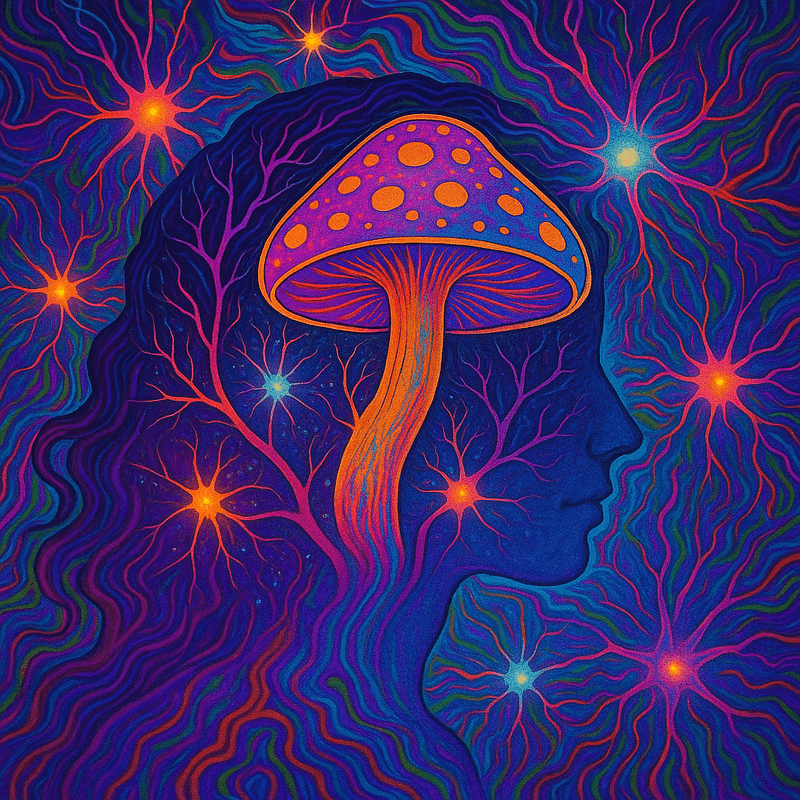
Eight years ago, I took magic mushrooms, expecting to have an eye-opening, transformative experience. Instead, I found myself overwhelmed by an intensity I’d never imagined possible.
Rather than psychedelic visuals, it was as if my senses were dialed up to unbearable levels. Light, sound, and touch became excruciatingly intense. Every sensation was amplified beyond tolerance, and my overwhelming urge was simply to escape my own body — to shut down, to stop feeling. It wasn’t until later that I learned this reaction closely resembles symptoms of a histamine shock, where the body’s sensory systems become hyper-sensitive.
In the weeks, months, and eventually years that followed, the trauma haunted me. I’d suddenly find myself thrust back into the same overwhelming sensory overload — sweating, heart pounding, convinced my brain was irreparably damaged. Anxiety attacks became a regular part of my life, triggered seemingly by nothing at all, or perhaps by everything — stress, certain foods, even mild alcohol consumption.
I searched for answers everywhere. Therapists and psychiatrists gave me all sorts of diagnoses — severe depression, severe anxiety, panic disorder, bipolar, and even ADHD. Whenever they didn’t know what to call it, they just found a new label. Medications were prescribed in rapid succession, but instead of helping, most of them only made things worse. My gut became more inflamed, my body felt more unstable, and the cycle of flashbacks and anxiety only deepened.
Of course, I had my fair share of childhood trauma and past pain to work through, and I did do the hard emotional work. But it never explained 100% of what was happening, nor did it bring the relief I desperately needed. Deep down, I sensed something physical was being overlooked.
It wasn’t until much later, after extensive research into chronic physical symptoms, that I discovered Mast Cell Activation Syndrome (MCAS).
MCAS is an immune disorder where mast cells — immune cells scattered throughout our bodies — become overly sensitive, releasing chemicals like histamine excessively. High levels of histamine can trigger allergic-like reactions, causing symptoms ranging from rapid heartbeat and dizziness to severe anxiety and panic-like sensations.
Eventually, I found a doctor specializing in integrative medicine who changed everything. She reassured me I wasn’t going crazy, nor did I have purely psychological issues. Instead, my symptoms stemmed from an inflamed gut and a heightened histamine sensitivity due to MCAS. My psychedelic trauma, she explained, was likely an extreme histamine overload — essentially an allergic shock — that my nervous system encoded as trauma. Consequently, whenever my histamine levels spiked again, the trauma replayed vividly, as if my body was reliving that original event.
Scientific research supports this hypothesis. Studies have increasingly shown that histamine and mast cell activation play a significant role in reinforcing traumatic memories and anxiety disorders like PTSD. Histamine can heighten emotional memory retention and reactivity, explaining why my panic states felt so viscerally tied to the mushroom trauma.
Understanding this biological connection didn’t magically erase the trauma, but it empowered me to address my symptoms differently. I focused on lowering histamine in my diet, explored supplements and medications to stabilize mast cells, and learned stress-management techniques to calm my nervous system. Gradually, the intensity and frequency of my flashbacks reduced significantly.
And yet, the lesson wasn’t over. Even today, if I neglect myself for a while — drinking too much alcohol, loading up on coffee, running on too much stress for too long — the flashbacks creep back in, reminding me that my system needs care. In a strange way, this sensitivity feels like a constant invitation to level up and live a better, more balanced life.
Today, while my experience with mushrooms remains a painful memory, it no longer controls my life. Unraveling the connection between trauma, histamine, and MCAS was transformative. It taught me that what feels psychological can often have deep physiological roots — and recognizing this intersection is a powerful step toward healing.